Who should buy the Kuvings REVO830?
Frequent celery, carrots, cucumber, apples, beets, and mixed produce for shoppers who prefer separate long-produce and 3.5-inch feed routes to a large preloaded hopper. The right buyer starts with ingredients and routine, not the badge on the front. Write down the produce used most often, the number of servings, the available preparation time, and how much washing feels realistic after an ordinary weekday session.
Separate Auto-Cut chute, 3.5-inch flip-gate chute, Smoothie and sorbet strainers are the clearest reasons this model enters our shortlist. Each advantage matters only when it removes friction from the main use case. A feature that appears impressive but is used once a month should not outweigh an easier daily feed path, more manageable part set, or better fit under the cabinets.
Who should keep comparing?
Choose AUTO10 for maximum staged batch loading, Nama J2 for a different hands-free chamber, Hurom H70 for a smaller strainer-free footprint, or a horizontal specialist when very controlled greens feeding matters most.
Know before you buy: Its two feed routes and conventional mesh strainer reward model-specific preparation and prompt brushing; it is not a hands-off batch hopper like AUTO10. That limitation does not make the product weak. It defines the shopper for whom a different mechanism, capacity, or footprint is the more responsible recommendation.
What the exact model includes
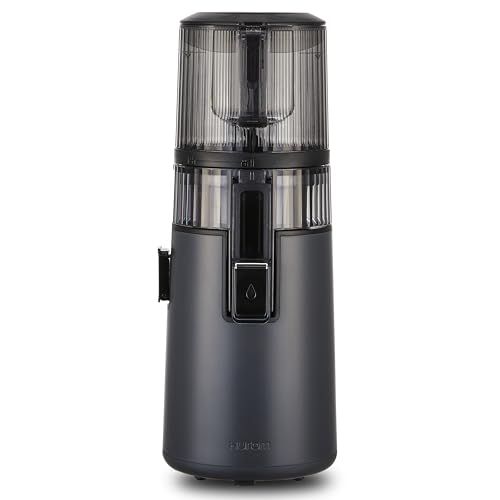
REVO830 gives two physical entrances to one vertical auger system. The flip gate is intended for compatible round or larger pieces; the narrow Auto-Cut route guides long ingredients toward the cutting screw. The manufacturer specifically emphasizes carrots and celery, but the correct choice still depends on shape, hardness, pits, peel, damage, and the current manual. A 3.5-inch opening is not an instruction to force oversized produce, and Auto-Cut wording does not prove the machine cannot clog. Prepare the full recipe, choose the documented chute, alternate ingredient textures when the instructions support it, watch pulp movement, and stop rather than pressing harder if flow stalls. The smoothie and sorbet strainers change what leaves the chamber and add components to identify, wash, dry, and store; they are useful only when those modes are repeated. The maker's up-to-45-minute continuous run specification describes an operating limit, not a recommendation to fill every session or an approval for commercial service. REVO830 is a better fit than AUTO10 when the owner values guided long-produce control and a conventional feed rhythm over preloading a very large batch. Confirm the exact model, finish, voltage, current included strainers and tools, seller, condition, and warranty terms on the verified listing.
How the mechanism changes the experience
This model uses a slow auger or press-style extraction path. The mechanism favors controlled feeding and ingredient versatility, while the daily experience depends on feed opening, pulp exit, screen access, and how quickly the parts can be rinsed and rebuilt.
Cleanup and long-term ownership
The conventional strainer path needs prompt attention. Use the supplied strainer-cleaning tool and brushes as directed, clear the pulp outlet, inspect the lid and both chute paths, remove residue around the auger and seals, and dry every food-contact part before reassembly. Easy-to-clean positioning is not a promise of no brushing, and removable does not automatically mean dishwasher-safe. Keep the motor housing and cord out of water.
Fit this model to the complete station
The listed counter profile is large. For the Kuvings REVO830, test that description against the actual loading clearance, vessels, removable pieces, sink, drying area, and storage position in your kitchen. The most important constraint is the same one identified above: Its two feed routes and conventional mesh strainer reward model-specific preparation and prompt brushing; it is not a hands-off batch hopper like AUTO10.
For this specific review, the JuicerPress evaluation method means testing separate auto-cut chute against the model’s stated compromise, then checking whether celery and hard-produce describes the household’s real routine.
Put the Kuvings REVO830 through a real-use check
Build the check around frequent celery, carrots, cucumber, apples, beets, and mixed produce for shoppers who prefer separate long-produce and 3.5-inch feed routes to a large preloaded hopper. Those are the jobs that justify considering this exact model. A normal session should include the actual produce, serving count, cutting board, containers, and cleanup window the household expects to use—not an unusually small demonstration batch. The model’s clearest advantages are separate auto-cut chute, 3.5-inch flip-gate chute, smoothie and sorbet strainers. Note which advantage removes a repeated inconvenience and which one merely sounds appealing on a listing.
Now test the rejection case. Choose AUTO10 for maximum staged batch loading, Nama J2 for a different hands-free chamber, Hurom H70 for a smaller strainer-free footprint, or a horizontal specialist when very controlled greens feeding matters most. That boundary deserves as much weight as the reasons to buy. If the household’s most frequent recipe, physical reach, storage location, or washing limit falls on the wrong side of it, eliminate the Kuvings REVO830 before comparing price. A capable machine can still be a poor fit when its strongest feature solves a secondary problem.
Use the Kuvings REVO830’s Vertical cold press path as the final category check. Follow celery from preparation to liquid and pulp collection, then identify the surfaces needed to preserve separate auto-cut chute. Decide whether that motion and result fit the person who will operate, wash, and store this model most often.
Use the alternatives as decision controls
Kuvings AUTO10 changes the comparison to a vertical cold press workflow with a large counter profile. Its useful case is batch and wide-chute, supported by 100-ounce self-feeding hopper and 240-watt induction motor. Keep the Kuvings REVO830 when its own mechanism and strengths serve the primary routine better; move to Kuvings AUTO10 when this difference outweighs its tradeoff: The very large hopper and multi-strainer kit create a substantial washing, drying, and storage station that is difficult to justify for one small glass.
Nama J2 changes the comparison to a vertical cold press workflow with a large counter profile. Its useful case is batch and wide-chute, supported by self-feeding hopper and fine and coarse strainers. Keep the Kuvings REVO830 when its own mechanism and strengths serve the primary routine better; move to Nama J2 when this difference outweighs its tradeoff: The hopper reduces active feeding, but the chamber, spinning brush, auger, strainers, outlets, and containers still require a complete hand-cleaning and drying routine.
Hurom H70 changes the comparison to a vertical cold press workflow with a standard counter profile. Its useful case is batch and wide-chute, supported by 15.2-ounce chamber and two-part easy cleaning multi auger. Keep the Kuvings REVO830 when its own mechanism and strengths serve the primary routine better; move to Hurom H70 when this difference outweighs its tradeoff: Its narrower base is still paired with a 17.2-inch height and 14.8-pound weight, so it should not be confused with a lightweight travel juicer.
Plan the first week before ordering
Choose one uncomplicated recipe from the intended uses above and write the preparation sequence before the machine arrives. Confirm which produce needs trimming, pitting, peeling, shortening, or portioning in the current instructions. Decide where the juice vessel and pulp container will sit and where wet pieces will dry. This rehearsal is especially important for the Kuvings REVO830 because its large profile must fit as an operating station, not merely as a stored appliance.
Begin the Kuvings REVO830 with a modest celery batch and change only one relevant factor between sessions. Track how separate auto-cut chute and 3.5-inch flip-gate chute affect the routine, while treating its two feed routes and conventional mesh strainer reward model-specific preparation and prompt brushing; it is not a hands-off batch hopper like auto10. as the boundary to watch. Ingredient condition, assembly, pace, and retained liquid can change the observation, so stop for abnormal behavior instead of trying to force a preferred outcome.
End every trial by timing the ownership routine that matters most: disassembly, removal of loose pulp, screen or strainer access, washing, inspection, drying, and reassembly. Compare that experience with this model-specific ownership note: The conventional strainer path needs prompt attention. Use the supplied strainer-cleaning tool and brushes as directed, clear the pulp outlet, inspect the lid and both chute paths, remove residue around the auger and seals, and dry every food-contact part before reassembly. Easy-to-clean positioning is not a promise of no brushing, and removable does not automatically mean dishwasher-safe. Keep the motor housing and cord out of water. If the same friction appears after the routine is familiar, return to the alternatives above while the exact retailer terms are still easy to review.
Primary sources checked
Frequently asked questions
What are the two REVO830 feed routes?
Kuvings documents a 3.5-inch flip gate for compatible larger ingredients and a separate Auto-Cut chute for long produce such as carrots and celery.
Does Auto-Cut mean no preparation?
No. Inspect produce, remove pits and damaged areas, and follow the exact current guidance for shape and size.
Is REVO830 the same workflow as AUTO10?
No. REVO830 uses two guided feed chutes and active loading; AUTO10 centers a much larger staged self-feeding hopper.
What non-juice modes are documented?
Kuvings includes smoothie and sorbet strainers with the current product family. Use only the correct setup and current instructions for each mode.
Does 45-minute operation prove commercial duty?
No. It is the maker's household operating specification, not a commercial certification or restaurant-use approval.
Final verdict
The Kuvings REVO830 is the deliberate dual-chute alternative to a batch hopper. Kuvings documents a 3.5-inch flip gate for compatible larger ingredients and a separate Auto-Cut chute for long carrots, celery, and cucumber, plus juice, smoothie, and sorbet paths and operation up to 45 continuous minutes. That geometry can reduce cutting without turning every ingredient into a whole-produce candidate or eliminating active feeding. The exact verified Amazon offer is B0BZRH41TH; finish siblings were not counted as additional models. Choose AUTO10 for maximum staged batch loading, Nama J2 for a different hands-free chamber, Hurom H70 for a smaller strainer-free footprint, or a horizontal specialist when very controlled greens feeding matters most.
As an Amazon Associate, we may earn from qualifying purchases.
Check the current Kuvings REVO830 listing on Amazon ↗