Compare horizontal, vertical, batch-hopper, and true twin-gear masticating juicers by produce control, preparation, counter shape, screen access, and cleanup—not by slow-juicer labels alone.
All-in-one auger without a separate juicing screen
Automatic forward and reverse detection
Know before you buy: Its large batch chamber and premium footprint make the most sense when multi-serving, lower-attention juicing is a repeated routine.
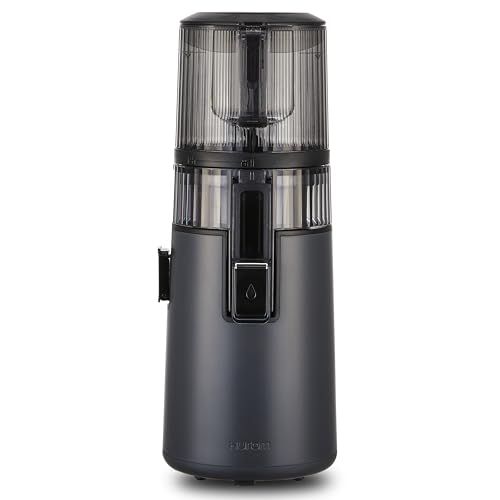
Know before you buy: The 19.8-pound vertical system saves horizontal counter length but still needs loading height, bowl-removal clearance, and a deliberate screen-cleaning routine.
Know before you buy: The auger and screen require deliberate feeding and prompt fiber cleanup, while the 24-ounce vessel is better suited to modest home batches than high-volume sessions.
Know before you buy: Its tall 18.27-inch body needs loading clearance, and the exact Amazon CSJ-300 offer should be matched to the current CSJ-300P1 family instructions.
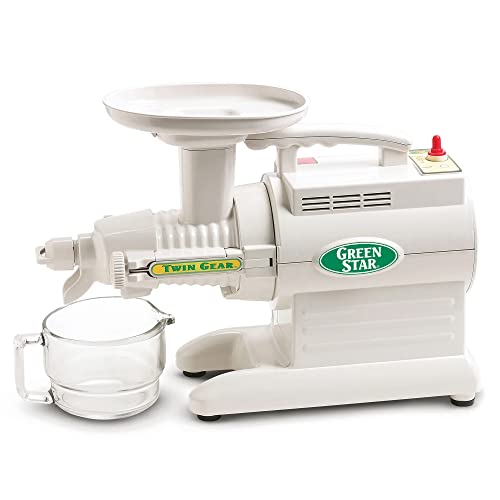
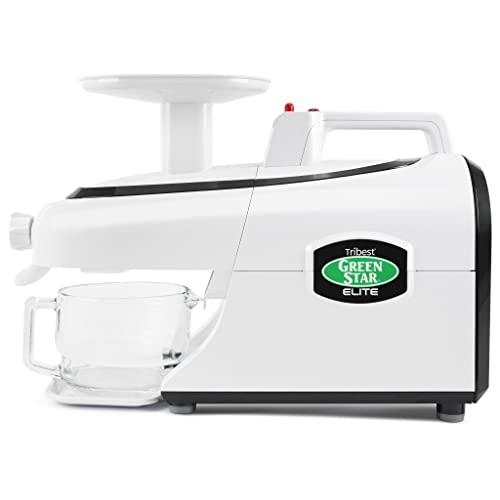
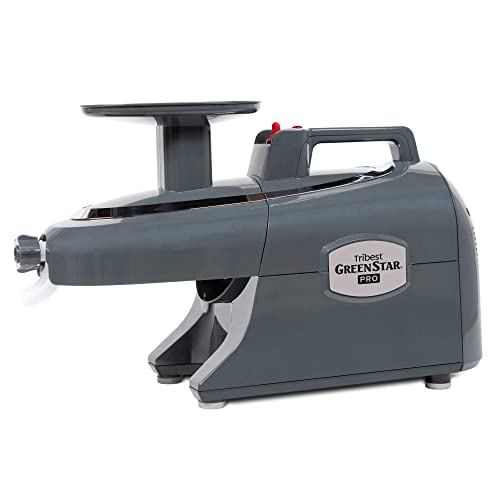
Know before you buy: The horizontal twin-gear assembly requires deliberate feeding, careful alignment, and more cleaning attention than a simple single-auger machine.
Know before you buy: Professional naming and construction do not by themselves establish restaurant certification or suitability for every commercial setting.
Know before you buy: As a legacy model, it is especially important to confirm the exact current configuration, included accessories, and replacement support before purchase.
Know before you buy: The very large hopper and multi-strainer kit create a substantial washing, drying, and storage station that is difficult to justify for one small glass.
Know before you buy: Its two feed routes and conventional mesh strainer reward model-specific preparation and prompt brushing; it is not a hands-off batch hopper like AUTO10.
Know before you buy: The hopper reduces active feeding, but the chamber, spinning brush, auger, strainers, outlets, and containers still require a complete hand-cleaning and drying routine.
Know before you buy: Its narrower base is still paired with a 17.2-inch height and 14.8-pound weight, so it should not be confused with a lightweight travel juicer.
Masticating describes a family of machines that use an auger to grip produce and press it against a screen. Cold press and slow juicer are common retail terms for much of the same home-juicer category. A product title may use one, two, or all three labels, so treating them as separate performance grades can send a shopper toward the wrong comparison.
The useful questions are physical. Is the auger horizontal or vertical? Does produce enter through a conventional chute or a batch hopper? Where does pulp leave? Can the screen be reached from both sides? How much room is needed to load, collect juice, remove pulp, and wash the parts? Those answers predict ownership more reliably than the largest word on the box.
Horizontal, vertical, and batch-hopper formats
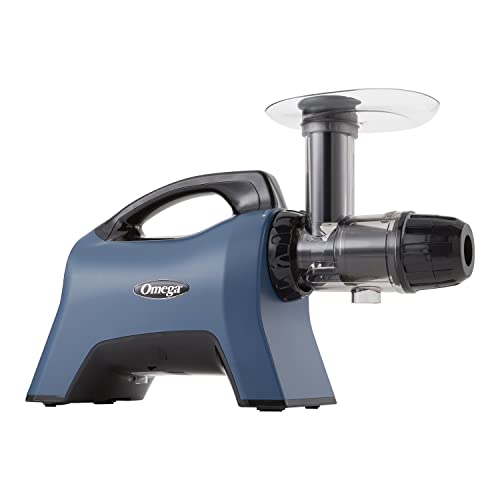
A horizontal masticating juicer lays the feed path across the counter. The operator usually adds manageable pieces in a deliberate sequence and can see when a fibrous ingredient needs a slower pace. This layout is a sensible starting point for frequent leafy greens and for shoppers who will genuinely use approved food-processing attachments. Its obvious tradeoff is counter length, plus space for vessels at both outlets.
A standard vertical machine stacks the auger and bowl upward, reducing width while increasing operating height. Gravity can assist the feed, but the machine still needs correct cutting and pacing. A wide or batch-hopper vertical shifts more work into a larger loading bowl. That can reduce repeated chopping and pushing for compatible produce, but it creates a bigger lid, chamber, and set of food-contact surfaces to wash and dry.
Horizontal: deliberate feeding, strong visibility, and possible multi-function versatility.
Standard vertical: narrower counter footprint with height and cabinet-clearance needs.
Batch hopper: less active loading for compatible ingredients, with a larger bowl and cleanup footprint.
Match the auger path to the produce basket
Leafy greens and herbs are light, flexible, and prone to bunching. A controlled auger path helps, but technique remains important: make manageable bundles, avoid stuffing the opening, and alternate textures only when the recipe and manual support it. Celery and other fibrous stalks should be cut to the model's guidance so long strands do not wrap around moving parts or collect at the pulp outlet.
Carrots, ginger, turmeric, beets, and other dense ingredients need patient feeding and pieces that fit without force. Soft berries, ripe tomatoes, and overripe fruit can create thick puree or rapid screen buildup, especially when fed alone. Mixed recipes often move more predictably than a full bowl of one soft ingredient, but pits, stones, hard stems, stickers, and any excluded peel still must be removed.
Feed opening size changes labor, not ingredient rules
A conventional chute exchanges more cutting for a smaller loading area and an orderly piece-by-piece rhythm. A wide opening or self-feeding hopper can remove repetitive knife work from an apple, cucumber, or mixed-produce batch, but it does not make every item safe to load whole. Shape, ripeness, pits, thick rinds, long fibers, and the exact manual remain decisive.
Test a product claim against a normal recipe. Write down each item, how it must be washed and trimmed, whether it needs pitting or peeling, and the number of pieces required. Then compare active feeding time with the larger hopper's bowl washing and drying. The better design eliminates the task that actually prevents the household from juicing; it does not merely win the chute-width specification.
Screen, pulp exit, and texture deserve equal attention
The auger moves produce, but the screen performs the separation. Fine mesh can support a lighter-textured glass while demanding prompt brushing. Coarser or pulp-control options can retain more body. Ingredient condition, feeding pace, screen cleanliness, and pulp settings all influence texture, so a masticating label does not guarantee pulp-free juice or one fixed consistency.
Follow the pulp from the screen to its exit. A clear, reachable channel is easier to inspect when fibrous material accumulates. Stop and follow the manual if the flow slows, the machine repeatedly stalls, or unfamiliar sounds appear; adding force is not a solution. When comparing reviews, separate finished texture from apparent yield because a glass containing more fine pulp can look fuller without reflecting cleaner separation.
Decide whether attachments are useful or clutter
Some horizontal nutrition systems include or support approved functions beyond juice, while some vertical models emphasize a focused juice workflow. Extra screens, nozzles, or processing pieces can add genuine value when a household already has a recurring plan for them. They are not free versatility: every additional part requires confirmation, storage, cleaning, and correct assembly.
List the non-juice function and how often it will be used before paying for it. Confirm that the exact model and current configuration include the necessary attachment; similar model names can ship with different bundles. If the answer is occasional curiosity, a simpler juicer with fewer pieces may offer better everyday value. Never use an attachment or ingredient that the specific manual does not approve.
Size the machine for an ordinary session
A one-glass routine favors quick assembly, a manageable screen, low retained volume, and parts that fit easily in the sink. A large hopper can be unnecessary if washing its bowl takes longer than cutting a small serving. For families or planned batches, hopper capacity, juice-container placement, pulp-bin volume, and model-specific operating limits become more important than the smallest stored footprint.
Avoid buying for the largest batch imagined. Record the number of servings made on a normal weekday, then walk through loading, emptying, pouring, rinsing, and drying that amount. A larger machine may reduce active feeding and still create more cleanup. A smaller one may fit beautifully and require too many reloads. Capacity earns value only when it matches repeated volume.
Measure a working station, not an appliance rectangle
Measure width, depth, operating height, lid swing, pusher clearance, juice-cup position, pulp-bin removal, cutting-board space, access to an outlet, and the route to the sink. Horizontal machines need length; vertical machines need height; hopper machines need room above and around the lid. Parts also need an open drying area after every session.
Accessibility matters as much as dimensions. A lighter or compact machine may be easier to retrieve, but repeated lifting can still reduce use. A permanent station can improve consistency if it does not crowd food preparation. Place the machine on the stable surface required by its instructions, keep ventilation clear, and never interpret a quieter motor as permission to ignore unusual grinding, leaking, odor, or heat.
Make screen cleaning a purchase criterion
Masticating machines usually separate into a hopper or chute, auger, screen, bowl, outlets, containers, and one or more seals. Fresh residue rinses more easily than dried pulp, so the realistic cleanup test begins immediately after the last ingredient. Reachable mesh, a visible pulp path, comfortable part size, and obvious reassembly can matter more than the raw number of components.
Dishwasher-safe language must be checked for the exact part and model. Removable does not automatically mean dishwasher-safe, and the powered base must stay dry. Review rack placement, water-temperature guidance, removable seals, brush instructions, and drying before purchase. A machine that can be cleaned correctly in the household's actual sink is a better long-term choice than one with a nominally faster extraction cycle.
Compare value without relying on a changing price
A value masticating juicer should handle the primary produce, fit the available station, and make the screen easy enough to clean. A premium format should remove a specific recurring problem such as active batch loading, limited counter width, or the need for an approved multi-function system. Price alone does not prove extraction quality, durability, quietness, or suitability.
JuicerPress avoids static prices because Amazon inventory, sellers, bundles, and prices can change. Use the internal model review to understand the workflow, then open the exact Amazon listing to verify the model number, included pieces, seller, current availability, price, and return terms. Compare like configurations and do not let a temporary discount override a failed non-negotiable.
Use a masticating-juicer decision worksheet
Write down the primary ingredient, two supporting ingredients, normal servings, desired texture, maximum preparation time, maximum cleanup time, working dimensions, storage plan, and whether one approved attachment would be used monthly. Choose horizontal, compact vertical, or batch hopper from that worksheet before comparing individual models.
Remove any machine that fails the format, space, or cleanup requirement. For the remaining models, read the internal review, confirm the current manual, and check the exact Amazon configuration. Finally, use the Juicer Finder to challenge the category choice. If a dedicated citrus press or faster centrifugal machine better fits the repeated recipe, changing mechanism is more useful than forcing a masticating machine into the wrong job.
Auger format chosen for a stated reason
Primary produce and preparation checked
Normal serving volume matched to capacity
Full operating and drying space measured
Screen, seals, pulp path, and reassembly reviewed
Exact model, bundle, seller, and current terms verified
Choose a model pathway
Masticating Juicers separates the shortlist into 3 practical routes: horizontal control and multi-purpose versatility, standard vertical everyday juicing, wide-hopper and lower-attention batches. Start with the route that matches the dominant routine, then read its exact model review before opening the retailer listing.
Horizontal control and multi-purpose versatility
Start with the horizontal Omega when deliberate feeding, greens control, and approved nutrition-system functions matter more than a narrow footprint. Read the review for its counter-length and preparation tradeoffs.
These vertical formats suit shoppers balancing counter width, mixed-produce routines, and smaller batches. Compare chute workflow, pulp options, part size, and total operating height rather than treating every upright auger as interchangeable.
Use this path when repeated cutting and active loading are the main obstacles. Compare the exact hopper workflow, lid clearance, approved ingredient preparation, bowl washing, and included configuration before choosing.
Choose a masticating juicer by the auger format and complete kitchen workflow: horizontal for deliberate control and useful approved attachments, standard vertical for a narrower everyday station, or a batch hopper when active loading is the repeated obstacle. Verify preparation, screen access, capacity, operating space, exact model, and current Amazon listing before buying.
Use the Juicer Finder to test the ingredient, routine, space, and budget decision before purchasing.
Frequently asked questions
Is a masticating juicer the same as a cold press juicer?
The terms commonly overlap for household auger juicers. Masticating describes the auger-style mechanism, while cold press is broader shopping language. Compare the physical feed, auger, screen, pulp, and cleanup workflow instead of choosing by label.
Is a horizontal or vertical masticating juicer better?
Horizontal designs favor deliberate ingredient control and sometimes approved attachments; vertical designs save width and can make mixed-produce feeding more convenient. The better choice depends on produce, working space, batch size, and cleanup.
Are masticating juicers good for leafy greens?
Many auger machines are well suited to greens because they provide a controlled path against a screen. Bundling, feed pace, pulp clearing, and the exact model instructions still affect the routine.
Does a lower RPM make a masticating juicer better?
Not by itself. Auger geometry, screen, pulp exit, ingredient preparation, motor behavior, part access, and cleanup can matter more to daily use than comparing one speed number.
What should I check before buying a wide-hopper masticating juicer?
Check which produce still needs cutting, operating height, lid movement, bowl and pulp capacity, food-contact part size, screen access, drying space, and the exact included configuration.