The short answer: these are usually overlapping categories
A shopper can open one listing titled masticating juicer and another titled cold press juicer and find two versions of the same basic household mechanism. Produce enters a chute or hopper, an auger grips and compresses it, a screen separates juice from pulp, and separate outlets route the results. Slow juicer is another common name in this family. The words can help distinguish these machines from high-speed centrifugal baskets, but they rarely create two cleanly separated store aisles.
There are specialized pressing systems outside this common home-auger category, so the terms are not perfect technical synonyms in every industrial or commercial context. For a household purchase, however, the useful response to “masticating or cold press?” is usually to stop comparing labels and inspect the machine. Its auger orientation, feeding method, screen, pulp exit, bowl, operating limits, and cleaning sequence determine the routine.
What masticating tells you—and what it does not
Masticating is used to describe the crushing and pressing action of an auger machine. That mechanism creates a defined path for greens, stalks, roots, and mixed produce. It does not tell you whether the machine is horizontal or vertical, whether the hopper can hold a staged batch, how much cutting is required, how fine the screen is, or whether the parts will fit comfortably in the sink. Those differences can be larger than the difference between two labels.
The term also does not guarantee a particular texture, yield, noise level, or cleanup time. Produce freshness, ripeness, recipe composition, cutting size, feeding pace, screen condition, and pulp-control choices all affect the result. Treat masticating as the beginning of a mechanism description. A serious comparison continues through the entire path from produce bowl to drying rack.
What cold press means on a home-juicer listing
Cold press is the familiar shopping phrase applied to many slow auger juicers. It generally signals a different extraction approach from a centrifugal machine that shreds produce against a fast-spinning basket. It does not create a universal certification, prove that one model runs cooler than every alternative, or establish a fixed nutritional outcome. JuicerPress does not rank a machine from that phrase alone.
Read the exact product identity and manual. Similar names can conceal different feed systems, capacities, screens, accessories, and assembly steps. A listing that uses cold press prominently may still require deliberate piece-by-piece feeding, while another uses a large self-feeding bowl. Conversely, a product titled masticating juicer may be the most practical cold press option for a household. The format and workflow settle the choice.
Why the label comparison can lead to a bad purchase
If shoppers assume cold press is a premium level above masticating, they may pay for wording without solving their real bottleneck. A broad hopper does not help if the normal routine is one small ginger shot. A horizontal nutrition system does not add value if its approved extra functions stay in a cabinet. A compact vertical body does not fit if the lid cannot open beneath an upper cabinet.
Replace the label question with five decisions: primary produce, normal servings, acceptable cutting and active feeding, available operating space, and acceptable cleanup. Then choose a horizontal, standard vertical, or batch-hopper auger layout. Only after those requirements are clear should details such as pulp options, included accessories, containers, finish, and current price break a tie.
Horizontal augers favor deliberate control
A horizontal masticating machine places the auger across the counter. The operator usually feeds manageable pieces in sequence and can adjust pace as greens, fibrous stalks, or dense roots move through. Some horizontal systems also support approved non-juice functions. This format deserves attention when ingredient control and genuinely useful versatility outweigh the need for a narrow footprint.
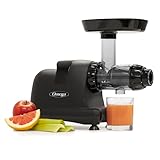
The tradeoffs are visible: the body takes more counter length, containers occupy space at the juice and pulp outlets, and conventional chutes can require more cutting. Measure the complete station rather than the motor base alone. The Omega All-in-One review on JuicerPress represents this pathway and links to its exact current Amazon destination for final model and configuration verification.
Vertical augers trade width for height
A standard vertical masticating juicer stacks the bowl and auger upward. This can preserve counter width and let gravity assist compatible pieces toward the auger. It does not remove preparation or the need to feed at the correct pace. Upper-cabinet clearance, hopper removal, operating height, bowl access, and space for the juice and pulp containers all belong in the measurement.
Ninja JC151, Omega Vertical, Anybear 200W, and Elite EJX600 occupy different positions within this upright format. Their internal reviews help separate pulp control, scale, value, and workflow without claiming that every vertical machine behaves identically. Use those reviews to make a shortlist, then verify the exact current listing and manual before purchase.
Batch hoppers reduce attention but enlarge the wash
Wide and self-feeding hoppers let shoppers stage more compatible produce and spend less time adding one piece at a time. This can be a meaningful upgrade for family servings or repeated mixed-produce batches. It is not a universal whole-fruit permission: pits, excluded peel, long fibers, damaged portions, and pieces outside the manual guidance still require preparation.
A larger hopper moves work rather than eliminating it. The lid needs room to open, the bowl must be emptied and washed, and extra seals or channels may need inspection. Omega Hands-Free, TUUMIIST Wide Chute, Canoly C16, and EanOruus 3-in-1 give JuicerPress shoppers verified model pathways in this group. Compare the labor removed from loading with the part size added at the sink.
Choose by ingredients before speed language
Leafy greens benefit from a controlled auger path, manageable bundles, and a pulp exit that remains clear. Celery and other stringy stalks need cutting according to the model guidance so fibers do not wrap or bridge. Carrots, ginger, turmeric, and beets need patient feeding without force. Soft berries and ripe fruit can create thicker output or screen buildup when processed alone.
A lower published speed number is not automatically a better purchase. Auger geometry, screen design, pulp movement, feed technique, ingredient sequence, capacity, motor response, and cleanliness all shape the result. Start with what enters the kitchen every week. If oranges are the sole routine, a dedicated citrus press may remove more work. If speed with apples and carrots dominates, a centrifugal collection deserves comparison.
Texture and yield require careful interpretation
An auger juicer can still produce visible pulp, foam, or settling. A fine screen, alternate pulp filter, ingredient ripeness, feed pace, and clean mesh all affect the glass. Some households prefer lighter texture; others accept more body. Decide that preference before treating pulp content as a defect or assuming a different marketing term will change it.
Yield claims are equally easy to oversimplify. A fuller glass can contain more suspended pulp, while a particularly fresh or high-moisture ingredient may make one session look exceptional. Compare ordinary batches under similar conditions and do not infer a guaranteed percentage from an isolated result. Stop and inspect the approved removable parts if flow changes; never force produce through a stalled path.
Cleanup is part of the extraction system
Most home auger machines ask the owner to clean a chute or hopper, auger, screen, bowl, containers, outlets, and seals. Prompt rinsing prevents pulp from drying into mesh and narrow channels. Reachable screen surfaces, a visible pulp outlet, manageable components, and intuitive reassembly often matter more than a claim about a small part count.
Dishwasher guidance is exact-model and exact-part information. Removable does not mean dishwasher-safe, and the powered base must not be immersed. Check the manual for rack position, detergent, temperature, seal removal, brushing, and drying. Before purchase, picture every food-contact piece in the actual sink and drying area. A machine that is simple to clean correctly is more valuable than one that saves a minute of feeding but adds a routine the household avoids.
Compare ownership value without a static price
Value is the amount of repeated friction a model removes while still performing the main job. A conventional machine may be the stronger buy for one or two servings. A larger hopper may earn its space for regular family batches. A multi-function system earns its accessory bundle only when those approved functions have a plan. A premium position does not guarantee better fit or durability.
Amazon seller, inventory, configuration, and price can change, so JuicerPress does not publish a static number. Read the internal model review first. Then use the exact Amazon link to confirm model number, included pieces, current seller, availability, price, and return terms. Compare equivalent bundles and do not let a changing price make an unsuitable feed path or cleanup routine look acceptable.
A five-minute pre-purchase test
Write one normal recipe and serving count. Mark every ingredient that needs washing, trimming, pitting, peeling, shortening, or cutting. Choose the preferred auger format, measure its full loading and container space, and reserve a drying area. Set a maximum number of minutes for cleanup. Any machine that fails one of those non-negotiables leaves the shortlist.
For the survivors, inspect the screen, pulp route, containers, seals, controls, and approved attachments in the exact documentation. Read the JuicerPress product review and related vertical-versus-horizontal guide. Use the Juicer Finder to pressure-test whether an auger machine is actually the right mechanism. The goal is not to win a terminology debate; it is to select a workflow that can survive an ordinary weekday.
Final verdict: compare machines, not synonyms
For most household purchases, masticating and cold press are overlapping descriptions of slow auger juicers, not rival categories with a universal winner. The meaningful split is among horizontal control, standard vertical compactness, and batch-hopper convenience. Each changes preparation, counter shape, feeding, part size, and cleanup.
Choose the physical format for a specific repeated reason, then compare verified models within it. Follow the manual for ingredient preparation, assembly, operating limits, stalls, and dishwasher use. JuicerPress provides internal reviews and exact Amazon destinations so shoppers can move from category education to current product verification without confusing a marketing label for a complete buying decision.
Models relevant to this decision
As an Amazon Associate, we may earn from qualifying purchases.


Frequently asked questions
Is every masticating juicer a cold press juicer?
Many home auger juicers are marketed with both terms, but product language is not perfectly standardized. Inspect the mechanism, format, feed path, screen, and manual rather than assuming the title settles the design.
Is cold press better than masticating?
Not as a general rule. The words often describe the same home machine. Horizontal versus vertical format, produce fit, batch size, preparation, screen access, and cleanup are more useful comparisons.
Do masticating juicers make pulp-free juice?
Not necessarily. Screen design, pulp settings, ingredient condition, feed pace, and screen cleanliness affect texture, and some fine pulp or settling may remain.
Should I choose the juicer with the lowest RPM?
No. Speed is one specification. Auger and screen design, pulp movement, feeding, capacity, operating limits, part access, and cleanup can matter more to the ownership experience.
Which format is best for a first masticating juicer?
Choose horizontal for deliberate control and useful approved attachments, standard vertical for a narrower everyday station, or a batch hopper when active loading is the main recurring obstacle.
Final verdict
For masticating vs cold press juicer: is there a real difference?, compare Omega All-in-One and Omega Compact Vertical only after the ingredient, working-space, and cleanup requirements pass. The better choice is the model whose documented tradeoff fits the routine you will actually repeat.